
There is a strange little stretch of late summer when absolutely nothing says fall — and yet somehow you can feel it coming.
It may still be hot enough outside to make the idea of a sweater insulting. The tomatoes are still producing, the grass still needs mowing, and turning on the oven for any length of time sounds like poor judgment.
But something has changed.
The sun disappears a little earlier. The birds seem to start their evening chatter sooner. The garden has stopped looking like it is beginning and started looking like it is finishing.
And then one evening the air changes just enough that you notice. You want the windows open. You start thinking about apples. You remember there is a blanket somewhere that you haven’t touched since spring.
And suddenly you want the house to feel a little more like fall. That does not mean you have to haul out a storage tote full of pumpkins. The scarecrow can have his moment soon enough.
One of the nicest ways to make your home feel like fall is to simply let the actual season begin changing the way you live in it.
Let Late Summer Finish First
Fall does not arrive everywhere on September 1.
Depending on where you live, August may still mean heat, peaches, tomatoes and bare feet. Somewhere else, nights may already be cool enough for an extra blanket.
That is part of the fun.
Instead of trying to make the house look like a season that has not arrived yet, pay attention to what is changing where you actually live.
If the garden is still producing tomatoes, enjoy the tomatoes.
If the nights suddenly require closing a window, close the window.
If your hydrangeas are beginning to fade into those muted late-summer colors, cut a few to dry for arrangements later in the fall.
There is no prize for being the first house on the road to display a pumpkin.
Summer is allowed to finish.
Bring the End of the Garden Indoors
Late summer has its own kind of abundance.
This is when herbs can be cut and dried, vegetables are being picked, flowers are going to seed and the things that spent the summer growing begin turning into things you can keep.
A few bunches of herbs hanging to dry can change the feeling of a kitchen more effectively than something bought specifically as fall décor — mostly because they are actually there for a reason.
Sage, thyme, summer savory, dill and parsley are all easy to dry. Chives are better chopped and frozen for later — apparently even the herbs have one member of the family who refuses to cooperate.
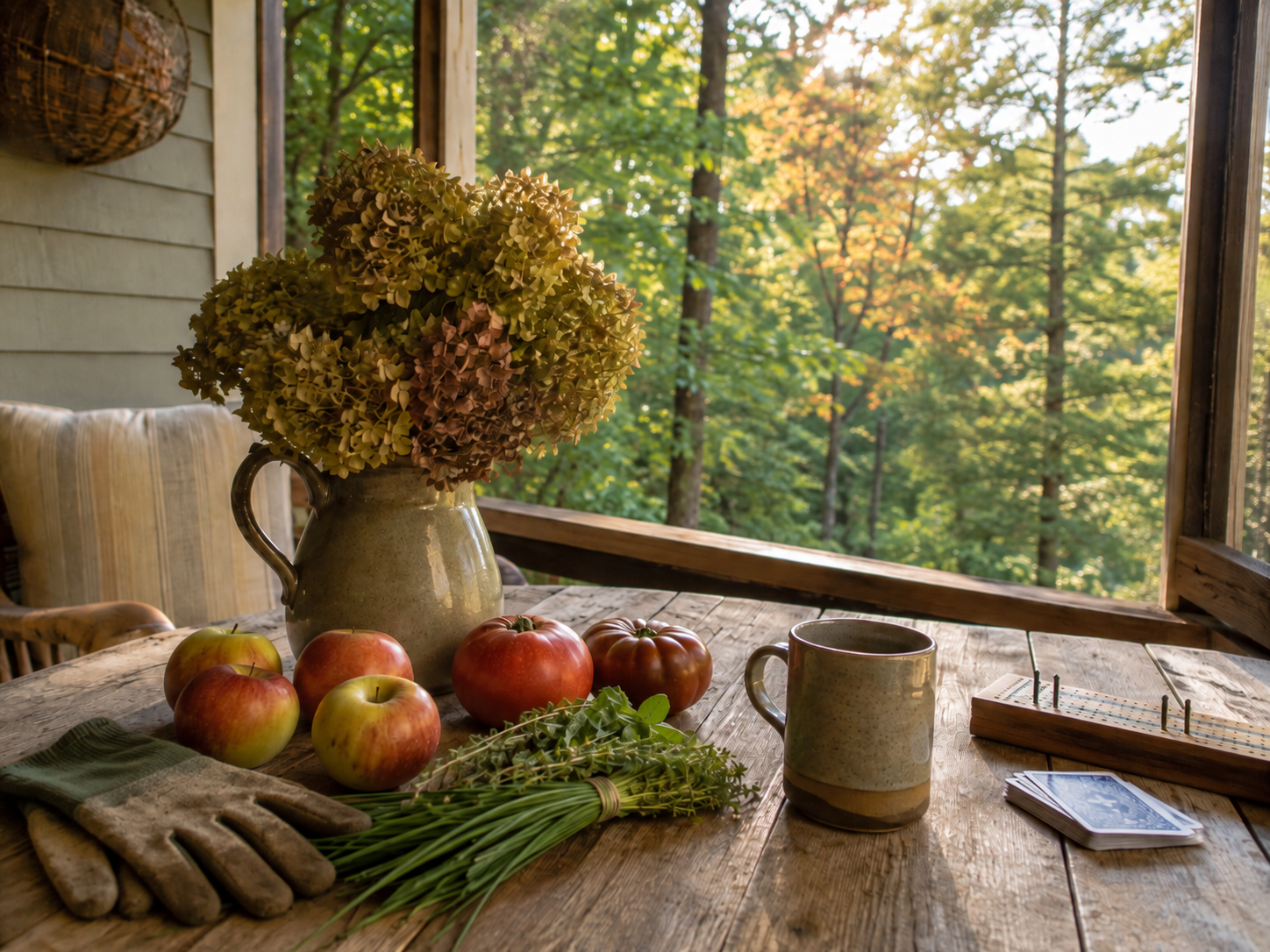
Those big flower heads that spent the summer outside begin fading into greens, dusty pinks, burgundies and browns — exactly the sort of colors we go out and buy for fall while the garden is already making them for us.Hydrangeas can come in too, Cut a few and dry them for arrangements later in the fall.
That little bundle of sage hanging in August may become part of Thanksgiving dinner.
Those hydrangeas may still be sitting on the table in October.
That is fall arriving without anybody having to unpack it.
Let the Kitchen Change Before the Living Room Does

This may be where you notice the season most.
Not with decorations.
With food.
Late summer still has tomatoes, corn, peppers, peaches and whatever else is coming out of the garden or farm stand. Then the apples start appearing. Squash begins piling up. Pumpkins arrive. And before long we are putting pumpkin in everything.
Then apple in everything.
Then squash in everything.
This is not necessarily a complaint.
Eating with the season means letting the kitchen change as the food does, instead of deciding that a certain date on the calendar means it is officially time for canned pumpkin.
Use the tomatoes while they are still good. Eat the corn. Notice when the first local apples show up. Bring home a squash you have not cooked since last year. Make applesauce when the apples are plentiful. And when the first genuinely cool evening arrives, put a pan of biscuits in the oven.
There is a point every year when turning the oven on changes from absolutely not to that sounds pretty good.
That may be one of the better signs that fall is finally getting close.
Pay Attention to the Light
Sometimes the house notices the season before we do.
The same room that was still bright well into the evening a few weeks ago starts getting dim earlier.
The birds seem to notice too. Their evening sounds begin sooner. Shadows stretch across the yard earlier. One night you look at the clock expecting it to be much later than it actually is.
Instead of fighting that change with every overhead light in the house, use it. Turn on a table lamp.
Sit in the sunroom while there is still light coming through the windows. Eat dinner on the porch while you still can.
Some of the nicest part of the transition happens while you are sitting outside watching it arrive.
Open the Windows When the Weather Finally Lets You
After a stretch of heat and air conditioning, that first evening when you can shut it off and open the windows feels almost like an event.
The whole house sounds different.
Birds are settling down earlier. Crickets start up. Leaves move outside. Somewhere in the distance somebody is probably mowing the lawn before dark because they have also noticed that darkness is arriving sooner than it used to.
Let the air through the house.
Fall does not have to smell like a candle labeled Autumn Something-or-Other.
Sometimes it smells like cool air coming through a screen.
Don’t Rush Inside Yet
One of the best parts of late summer and early fall is that little stretch when it is finally comfortable enough to sit outside again.
So eat dinner on the porch. The air is cooler, the sun is going down a little earlier and — possibly best of all — you may finally be able to finish a meal without spending half of it swatting mosquitoes.
That alone deserves recognition.
After supper, stay out there.
Or move to the sunroom.
Bring out a deck of cards.
Play Yahtzee.
Dig out the cribbage board.
Start a Scrabble game that may or may not survive until bedtime without an argument over whether somebody’s word is legal.
These do not have to be grand traditions.
Sometimes a seasonal tradition starts simply because you did something once, liked it, and found yourself wanting to do it again when the same kind of evening returned the following year.
Summer evenings are often about staying outside because the days are long.
Early fall evenings can become about lingering because suddenly you notice they are not.
Start Putting Summer Away — Slowly
For a while, two seasons usually occupy the house at the same time.
The beach towels are still around, but there is a blanket on the back of the couch. The sandals are still by the door, but somebody has gone looking for socks. The garden basket is still coming inside full, but canning jars are beginning to fill the pantry.
Maybe the scarecrow has appeared outside while the lawn mower is still very much in service.
That overlap is not something to fix.
It is the season changing.
So put summer away as you actually finish with it. Wash the picnic blanket after its last outing. Put away the beach bag when you know you are done with it. When evenings become chilly enough for a blanket, bring one out.
No grand seasonal reveal required.
Bring Something Inside That Came From Outside
Not everything that makes a house feel seasonal has to come from a store.
A few faded hydrangeas in a pitcher, late flowers in a jar, interesting seed heads, dried grasses or branches gathered after a windy day can quietly bring what is happening outdoors into the house.
The important part is that it should look like your outdoors. Fall in New England does not have to look exactly like fall in Georgia, Arizona or Oregon. Use what your own season is giving you.
That may be asters. It may be dried grasses. It may be hydrangeas. It may be apples. It may still be a bowl overflowing with tomatoes because summer is clearly refusing to leave.
Fine. Let it refuse.
You Don’t Have to Decorate to Notice Fall
There is nothing wrong with pumpkins, wreaths, mums — or scarecrows. We happen to be rather fond of scarecrows around here.
When the time comes, bring them on. But your home can begin feeling like fall long before any of that appears. It can start with herbs drying in the kitchen.
With faded hydrangeas in a pitcher.
With the first local apples sitting beside the last summer tomatoes.
With dinner on the porch while the birds settle down earlier than they did a few weeks ago.
With an open window and a cribbage board on the table.
With biscuits in the oven on the first evening cool enough that turning it on finally sounds like a good idea.
With pulling a blanket over your feet one night and thinking, Huh. I haven’t needed this in a while.
The seasons rarely arrive all at once. Maybe our homes do not have to either.
Discover more from A Little Off the Ordinary
Subscribe to get the latest posts sent to your email.